

Finding Emotion in Movement: The Core of My Work
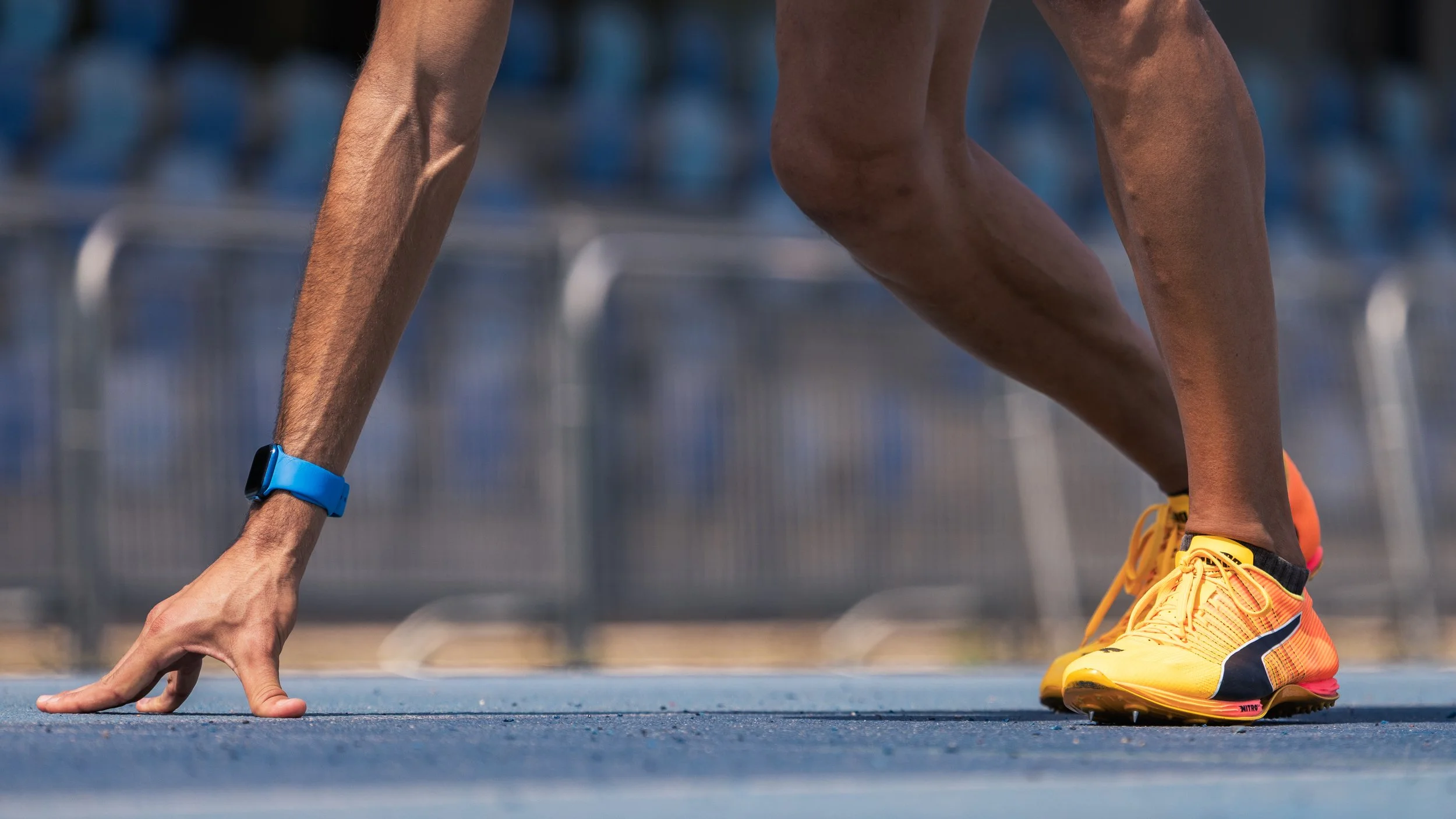
I’ll never forget the day I graduated from uni, although probably not for the reasons you might think. The ceremony was held in the courtyard of my university in The Hague. I wore a dress I had bought for a wedding I never got to attend because of Covid, and was exhausted from the chaotic week I’d had leading up to graduation. Between sleepless nights rushing to finish my thesis—my brain shutting off past 10 p.m.—and setting up my exhibition space for my end-of-year project, which involved building a structure where people would eventually walk into to watch a video piece I'd worked on during the yeat, and honestly, it had been intense. (For the record, I am absolutely not handy— nowhere near Bob the Builder level anyway.) Bärk, Magali, and Vix, if you’re reading this, I don’t know what I would have done without you.
My parents, my brother, and my best friend flew in from Spain to see me graduate, and I couldn’t have been more grateful. While the director was giving her speech, I couldn’t shake the irrational fear that they would call everyone in my year to the stage to get their diploma except for me. Thankfully, that didn’t happen. I officially graduated with my Bachelor of Fine Arts, specialized in Documentary Photography and Design. We celebrated and had lunch. After that, I headed to my exhibition room and greeted the people who came to see my work. At a certain point, I could have sworn I was seeing waves of blobs instead of actual faces.
When we finally got home, I climbed to the top floor of the overpriced, unfurnished apartment I had spent my last year of university in, where my parents were lying on a very uncomfortable air mattress that a kind neighbor had lent me for their stay. I squeezed in between them, and when they congratulated me, I just started sobbing in their arms. Why, you may ask? I had just GRADUATED. Four years of work had paid off, and I was supposed to be ready to enter the real world.
But was I really?
I couldn’t shake off the lingering fear. My safety net had torn. I was no longer in my comfortable bubble, where I could call myself a student and live with no responsibilities beyond passing my courses. Up until that moment, I had spent four years in a very privileged position, one many could only dream of: studying something I loved, fully supported by my parents, and without major financial pressures, unlike many of my classmates. My heart clenched every time one question replayed in my mind: What the fuck am I going to do with a photography degree? I hadn’t seriously considered my options. Throughout the course, we were guided to create “real art” instead of practical work, which often felt impossible for me since my interests had always leaned more aesthetic and commercial. I felt like I would never make it as a conceptual artist; even if I tried, I’d probably end up a starving one.
I have always been extremely sensitive, for better or worse, and have thought of myself as a quiet observer. I like to think of myself as a photographer who glides through crowds, capturing emotions without being noticed. If you had asked me two years ago where I saw myself professionally, I never would have pictured this. I’m incredibly grateful to make a living with my photography; and even though I label myself as an event photographer without a very specific niche, sports photography now makes up most of my practice, and I couldn’t be happier.
Photographing weddings or sports can be extremely challenging, largely for the same reason: you must capture key moments in fast-paced environments.
If you miss the moment, you miss the shot.
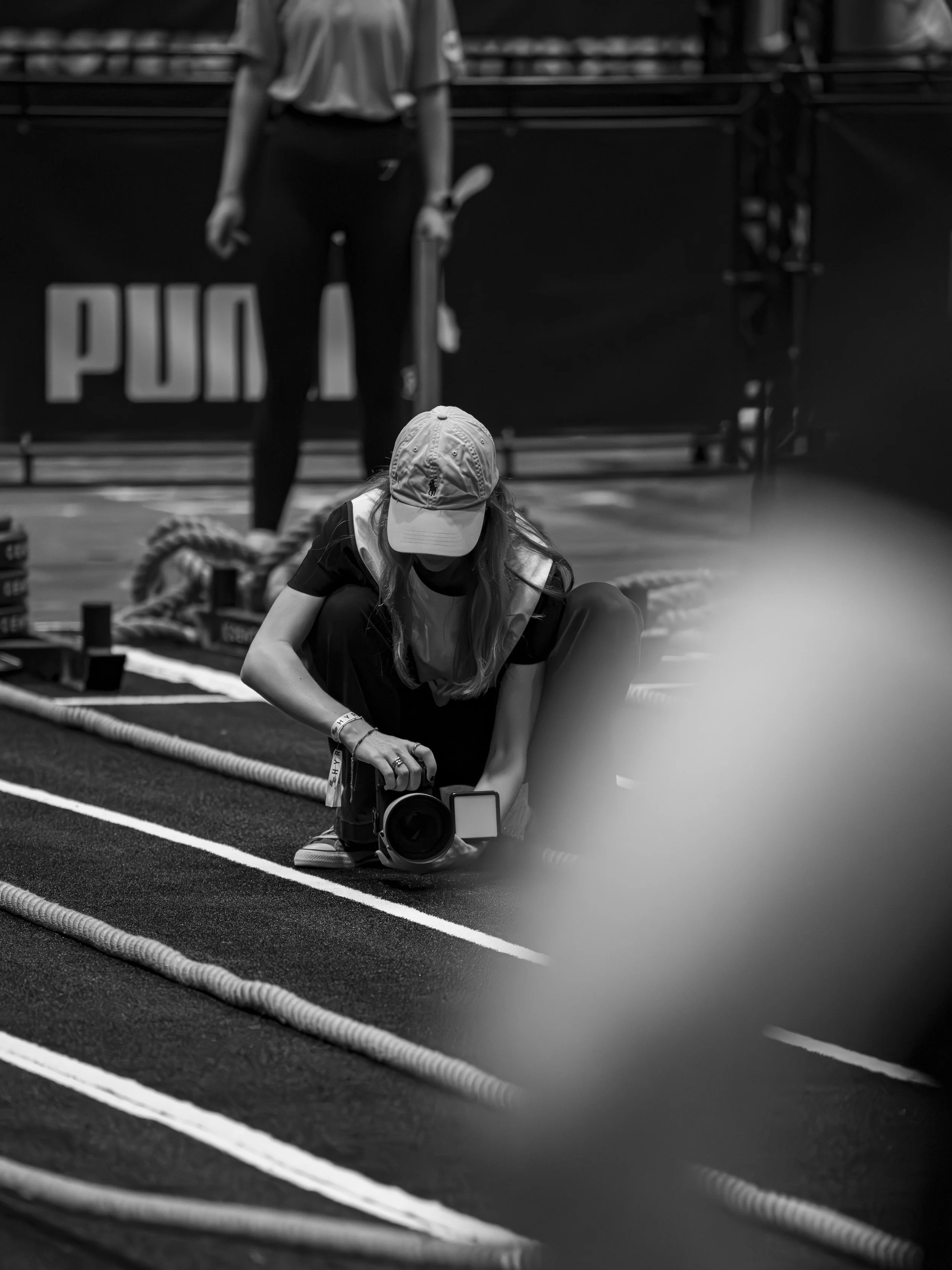
There are no redos in sports competitions. You will never get the same facial expression twice, the chance to capture the drop of sweat gliding down an athlete’s chin again, the look of determination when their partner cheers for them, or the joy radiating from someone crossing the finish line. People assume shooting sports just means having a good camera, pointing, and clicking. And while, yes, that works if you want your photos to look like your uncle Peter took them, if you want images that truly stand out, you need to step into the athlete’s shoes.
In moments like these, I’m grateful to feel as deeply as I do. Even though some events I shoot are technically the same—like HYROX, with its consistent stations, similar lighting, and repeated props—no set of images ever looks alike. These events are charged with energy and emotion, and every person who walks into the sports center brings something different. Each day of shooting feels new. We work between three and five days, and the energy is never the same twice. For me, the vibe of the crowd, the focus of the judges, and the drive of the athletes set the tone of my images.
When I shoot events that are so large in scale, everything else dissolves. I tune into the music, the yells of motivation, the not-so-lovely smells, and I just shoot. Working in a fast-paced environment demands physical and mental agility, but once you drop into it, the clicks come automatically and your brain slips into a kind of meditation.
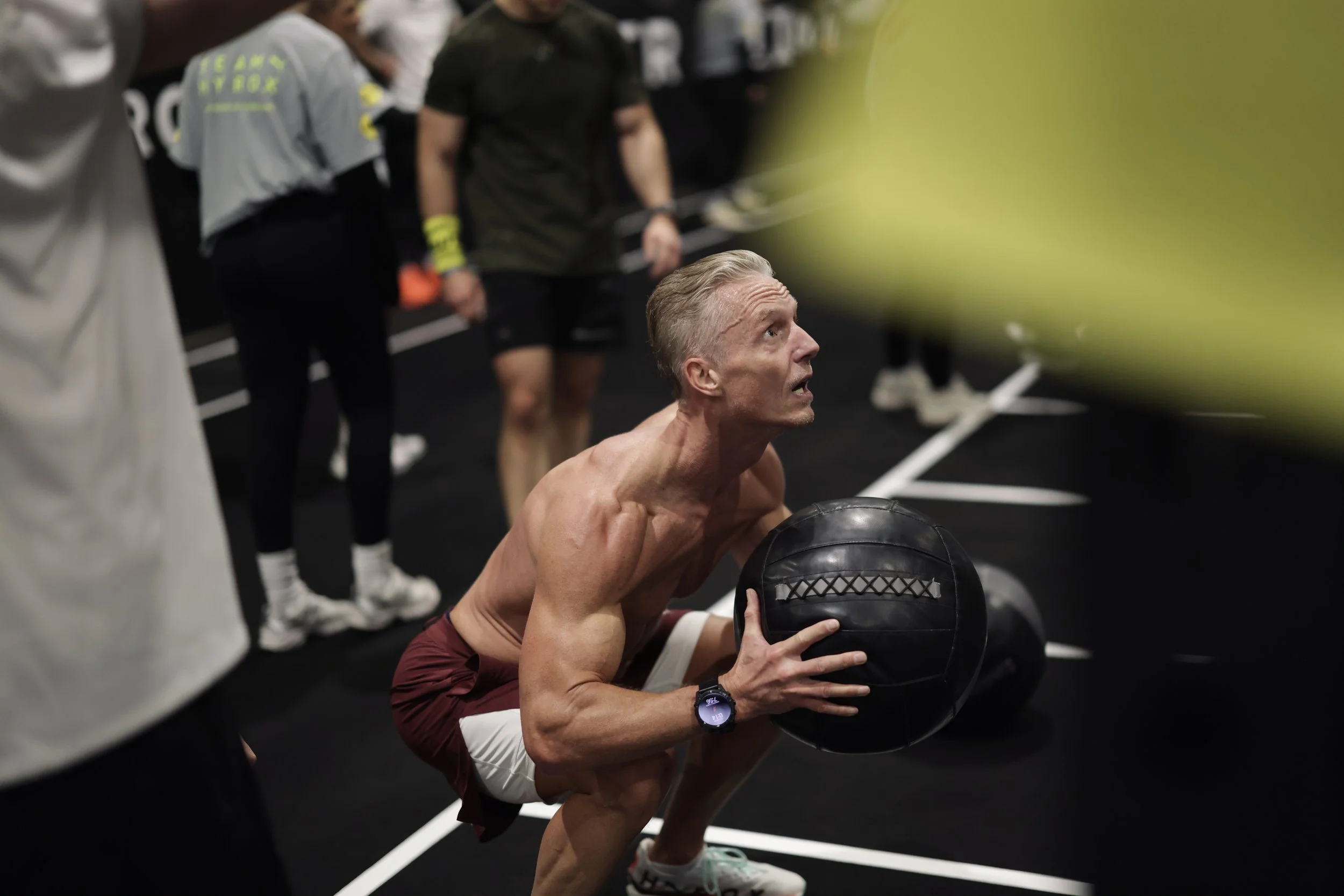
Shooting what some consider “boring” sport events has forced me to get creative, to find new angles and bring in new ideas in situations where the room to innovate is limited. Sports photography has reminded me of my value as a photographer and continues to inspire me to create work that feels true to me, not to anyone else. And then there’s the team I work with, the photographers who push, support, and laugh with me through it all. The sleepless nights, hunger, and the occasional tears of exhaustion suddenly make sense when you’re sharing the chaos with people who feel the same rush, the same frustration, and the same thrill of capturing that perfect moment in an athlete’s race. In those moments, it doesn’t just feel like work; it feels like being part of something bigger than yourself.
